The short answer
Not a volunteer doing it at 11pm on a Sunday. Grassroots club social media works best when it is someone's actual job: either a named, supported role inside the club with a clear weekly routine, or a service the club pays for so its volunteers can get back to running matchdays, events and people.
Why the socials end up being nobody's job
Ask a committee who runs the club's Facebook and Instagram and you often get a pause, then a name. It is usually the person who said yes once, years ago, and never got to stop. They post when they can, from their own phone, after a full day at work and a full day at the club.
Nobody's fault. Nobody's job. And because it is nobody's job, it is the first thing to slip when that person gets busy, moves on or burns out. The feed goes quiet in the middle of the season, which is exactly when the club needs it most.
What does good look like for a club's socials?
Good club socials are not about likes. They do four jobs for the club:
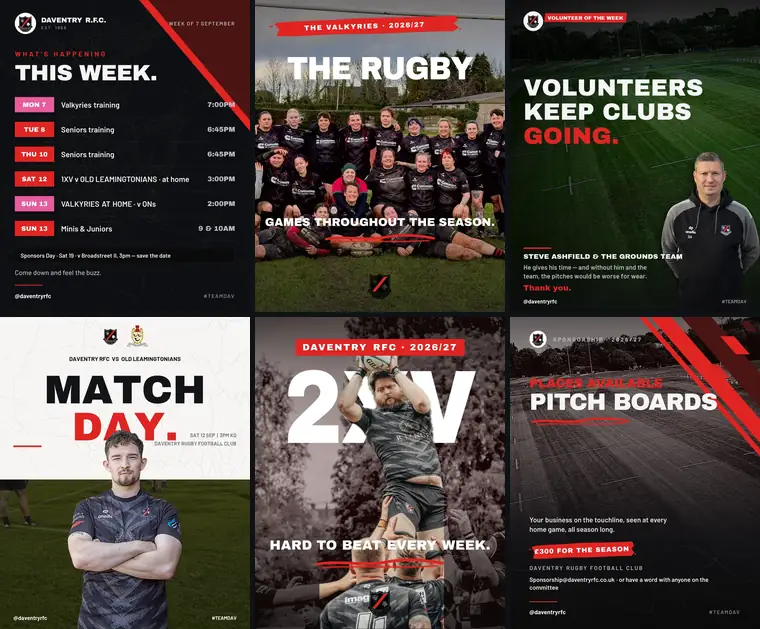
- Get people to the ground. Fixtures, kick-off times and what is on at the clubhouse, posted while people are still making plans.
- Find new players and volunteers. Recruitment posts that go out before people have chosen a club, not after you are already short.
- Look after sponsors. Posts that name the local businesses who back the club, so renewals come with proof.
- Thank the people who never get paid. Volunteers named in public, every section covered, not just the first team.
Every one of those needs a weekly rhythm. That is the part a volunteer on their own phone can rarely keep up.
What are a club's options?
1. A named volunteer role, properly supported
Make it a committee role with a job description, a weekly routine and a way for captains and coaches to send things in. It costs nothing, but it only works while that person has the time.
2. A rota across sections
Each section posts its own team news and results. It spreads the load, but the feed ends up looking like five different clubs, and the minis and juniors pages drift away from the main club's.
3. Hand it to a service
The club sends fixtures, its crest, colours, photos and sponsor list, and the posts go out every week in the club's own colours, on the club's own pages. The volunteers who used to chase it get their evenings back.
How to decide
Ask one question at the next committee meeting: if the person doing our socials stopped tomorrow, what would happen? If the honest answer is that the feed would go quiet, the club is relying on goodwill for something that brings in players, spectators and sponsor money. That is worth fixing on purpose.
Questions clubs ask
Should a rugby club pay someone to run its social media?
If the socials currently depend on one volunteer's spare time, paying for them is often cheaper than losing that volunteer. The test is whether the posts bring people to the ground, keep sponsors and help recruit players. If they do, they are worth doing properly.
Who owns the accounts if a club uses a service?
The club should always own its own pages and logins. A good service posts as the club, on the club's pages, and the club can stop at any time.
How often should a grassroots club post?
Most clubs do well with a steady weekly rhythm: the week ahead on Monday, team news on Friday evening, a matchday post on Saturday morning, results after the game, plus one volunteer or sponsor post through the week.